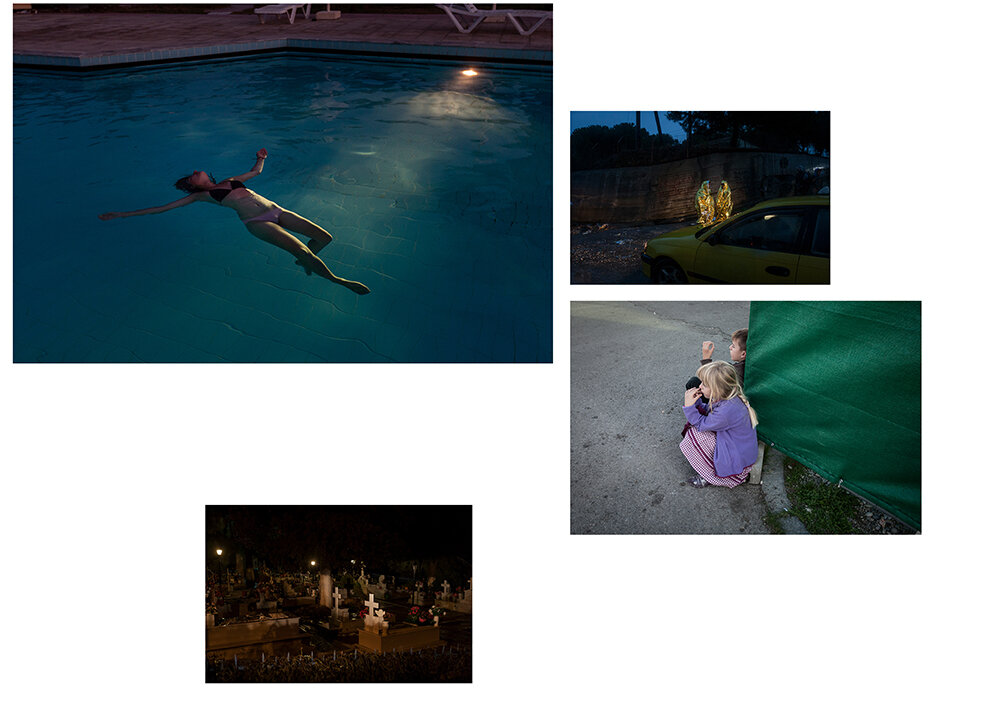
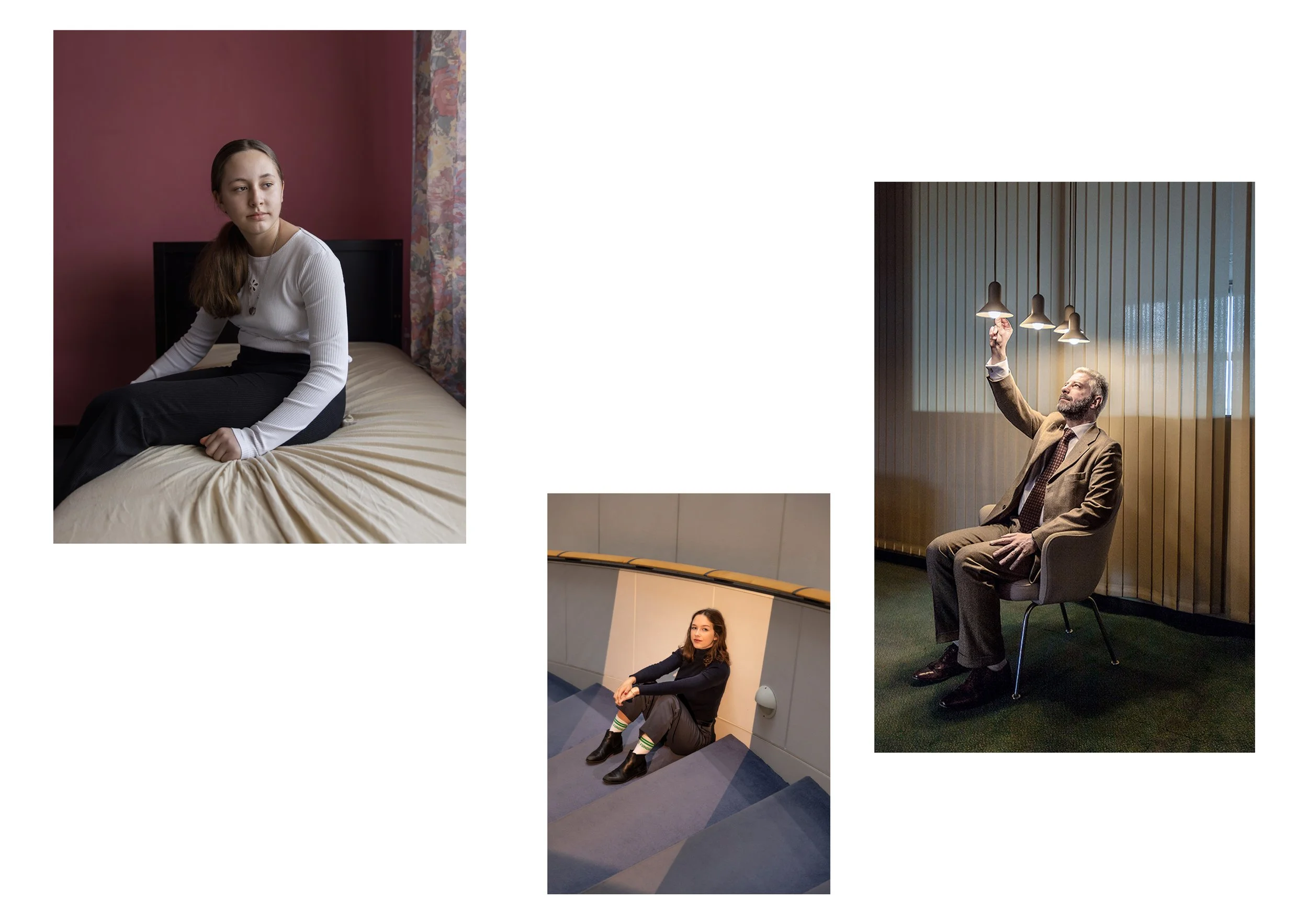
is an ongoing visual research into the perception of migration within the Schengen Area and the assumptions and biases that shape how we look at people who migrate.
The project portrays a range of places and situations along migration routes through Europe, and the people who find themselves there.
By combining different images, the work explores possible connections and similarities and questions familiar categories. It examines what we think we can infer from someone’s appearance, behaviour or surroundings, and the role that existing images, narratives and terminology play in this. Words such as migrant, refugee, newcomer, expat or local are not neutral, but evoke ideas about origin, privilege, belonging and freedom of movement.
Small gestures, chance encounters and seemingly banal details become part of a larger visual whole that also searches for what we have in common: the need for food, sleep, safety, affection, dignity and freedom.
The title Alle Menschen (werden Brüder) refers to Friedrich Schiller’s words “Alle Menschen werden Brüder” from Ode to Joy, used in Beethoven’s Ninth Symphony. Its melody became the anthem of Europe. The work examines the tension between the idea of a Europe built on freedom and connection and the borders, divisions and inequalities that determine who is able to move freely and who is not.
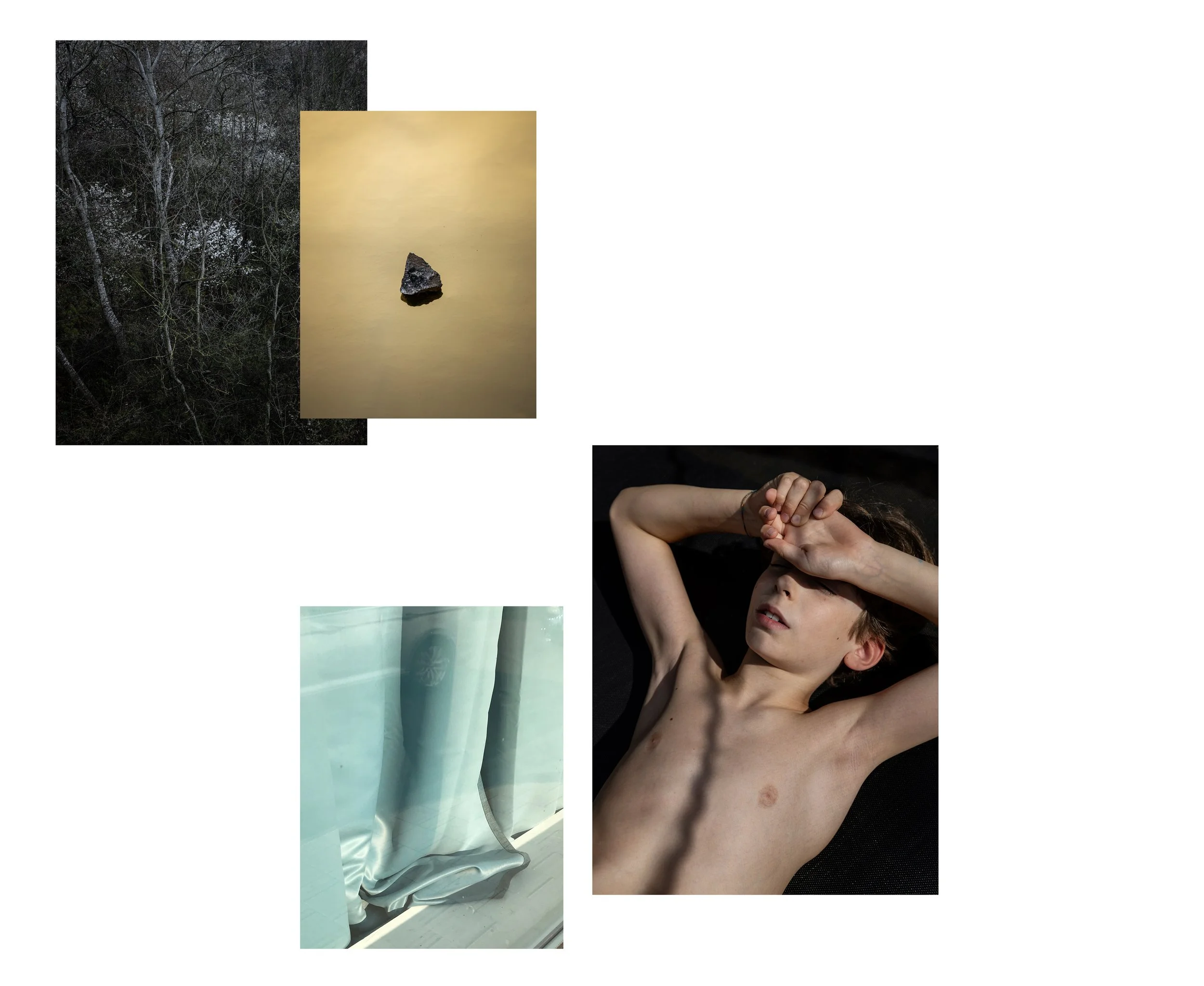
is an ongoing project in which photographs, quotes and drawings from the daily life of a mother and her son are collected. The project began in March 2020, when the COVID-19 pandemic largely confined their world to their home and the surrounding streets. For the first time, the camera was turned towards their own lives, making them both participants and subjects of the work.
The images emerge from observations and visual discoveries in the everyday. Gradually, an intimate and at times surreal microcosm emerges, in which closeness and distance, dependence and autonomy, tenderness and unease exist side by side. As the project continues, the son grows from a child into an adolescent, and the relationship between mother and son changes with him.
“I’m hungry” is by far the son’s most repeated phrase. As the project unfolds, this everyday phrase takes on different meanings, touching on care, longing and absence.
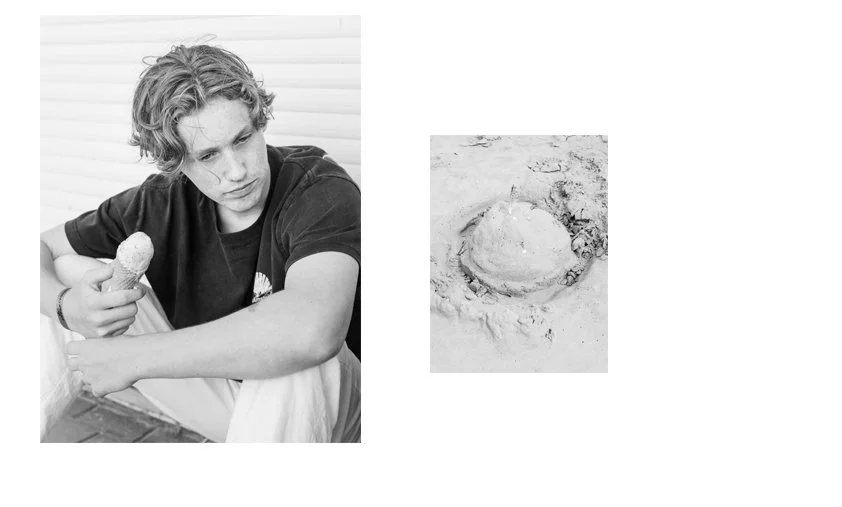
focuses on boys between the ages of fourteen and eighteen, as they transition from childhood to adulthood. The project stems from a fascination with this long-overlooked group and with a stage of life in which identity, friendship, group dynamics, freedom and responsibility are constantly in motion.
By following boys over an extended period of time, the project looks at their relationships with one another and how these shift between the individual and the group. They are searching for who they are, who they want to be, or who they think they should be, within a world in which the need to belong, social codes and online culture play an important role. They challenge and stand up for one another, are physically close and emotionally distant, tough as a group and gentle as individuals. Play, boredom, bravado and vulnerability exist alongside first crushes, alcohol, work and the taste of newfound freedoms.
Against the backdrop of this development, the world in which they are growing up is also changing. Climate change will help shape the future they are heading towards. In BOYS, these two developments come together: boys moving towards adulthood and searching for their place in a world that is simultaneously changing.
In April 2012, the body of a man was found by the side of a road, approximately forty kilometres outside St Petersburg. He had died a violent death. Next to his body were his passport, a small amount of money, his gold wedding ring and his watch. The man was a Belgian citizen who had been reported missing by his family three weeks earlier.
That man was my father.
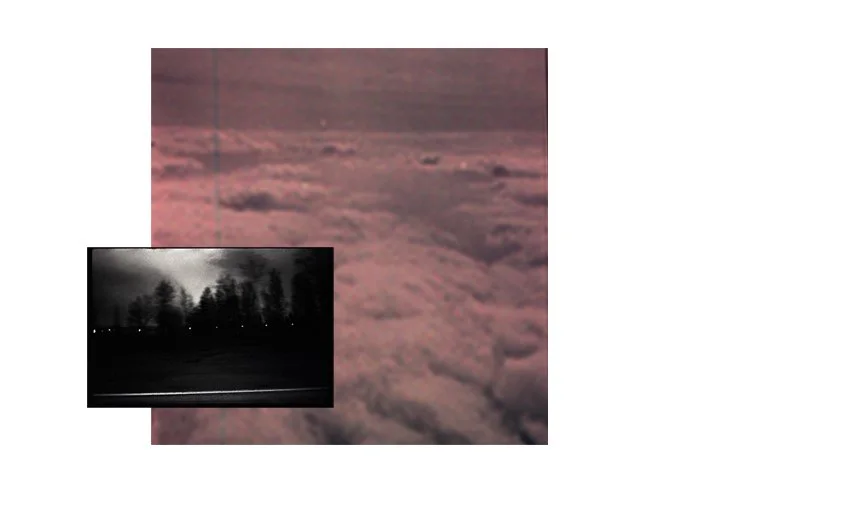
Five years later, I retraced the journey he had made, day by day and hour by hour. I travelled from Düsseldorf via Frankfurt to St Petersburg, and then on to the place where he was found. Along the way, I photographed everything and nothing, without knowing exactly what I was looking for.
The images follow the journey along motorways, through airports, waiting areas and other places of transit. They are everyday records of places where people arrive, depart, wait or pass through. Little seems to happen. Together, they trace the footsteps of my father’s final journey.